Insights for Microfinance & Lenders
- Oct 12, 2026
- 6 min read
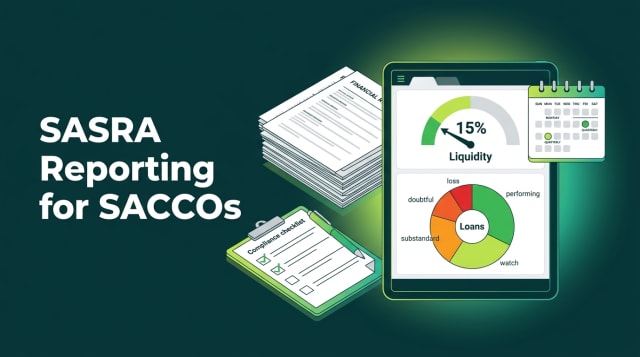
SASRA Reporting Requirements for SACCOs in Kenya: Returns, …
What SASRA requires deposit-taking SACCOs to report and when: monthly and quarterly returns, capital and 15% liquidity ratios, the five loan classifications with provisioning rates, and what your systems must produce.
Read More about SASRA Reporting Requirements for SACCOs in Kenya: Returns, Ratios and Loan Classification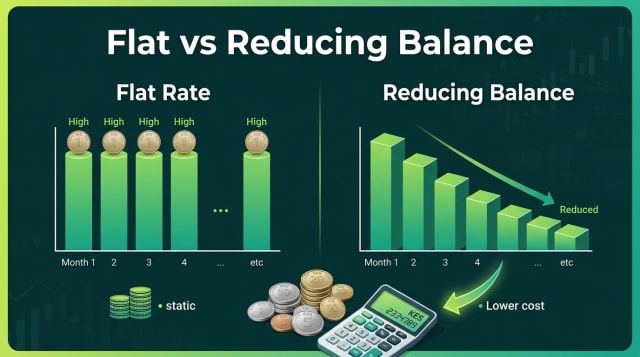
- Oct 12, 2026
- 5 min read
Flat Rate vs Reducing Balance Interest in Kenya: …
Flat vs reducing balance interest explained with worked KES examples: how each is calculated, why 2% flat is nearly double 2% reducing, the effective rate (APR) and which method lenders should use.
Read More about Flat Rate vs Reducing Balance Interest in Kenya: Explained with KES Examples
- Sep 30, 2026
- 8 min read
How to Automate M-Pesa Loan Repayments in Kenya: …
Stop reconciling M-Pesa statements by hand. How Kenyan SACCOs and MFIs use Paybill, STK Push and the Daraja C2B API to match loan repayments automatically, with a step-by-step setup checklist.
Read More about How to Automate M-Pesa Loan Repayments in Kenya: Paybill, STK Push & C2B Explained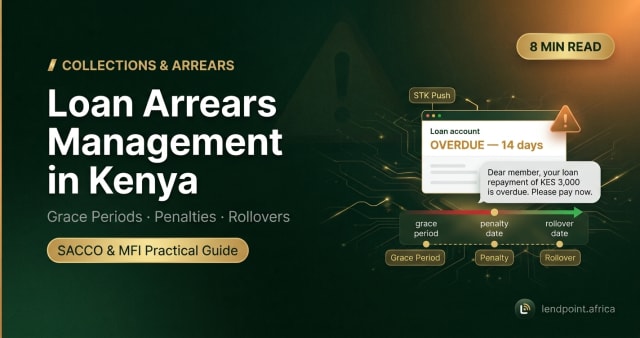
- Sep 30, 2026
- 8 min read
Loan Arrears Management in Kenya: Grace Periods, Penalties …
A practical guide for SACCOs and MFIs on handling loans in arrears: reminders, grace periods, fair penalty structures, when rollovers help or hide bad debt, and how to calculate PAR30, with worked KES examples.
Read More about Loan Arrears Management in Kenya: Grace Periods, Penalties and Rollovers (With KES Examples)
- Sep 23, 2026
- 9 min read
Loan Management System in Kenya — Complete Guide …
A complete 2026 guide to loan management systems in Kenya for SACCOs, MFIs and digital lenders: how they work, M-Pesa and USSD, SASRA, CBK and data protection rules, costs in KES and how to choose.
Read More about Loan Management System in Kenya — Complete Guide for SACCOs & MFIs 2026
- Jul 09, 2026
- 7 min read
10 Best Loan Management Systems in Kenya (2026), …
A fair comparison of 10 loan management systems used in Kenya, including Lendpoint, Fibo360, Presta, Kwara, Musoni and Saccotek, with published pricing, M-Pesa support, and who each one is best for.
Read More about 10 Best Loan Management Systems in Kenya (2026), Compared with Pricing