Micro Loan Software in Kenya: How to Choose a Micro Loan Management System

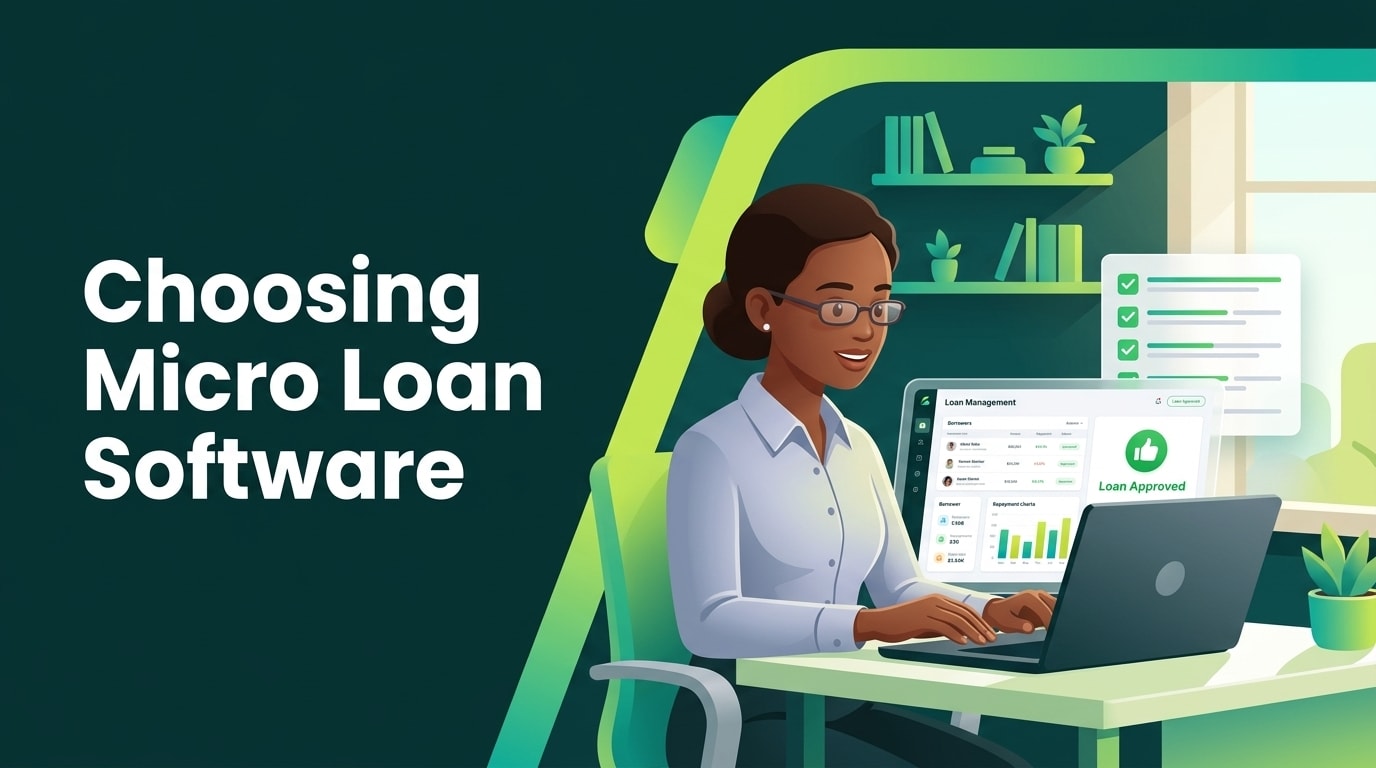
Micro loan software is the system a small lender uses to issue, track and collect small loans: the KES 2,000 to KES 100,000 loans that traders, boda boda riders, farmers and salaried workers take for a few weeks or months. Most Kenyan micro lenders start with a notebook, Excel and the M-Pesa statement. Most switch to software when the loan book grows past what one person can reconcile, or after a bad month reveals how much had quietly gone into arrears.
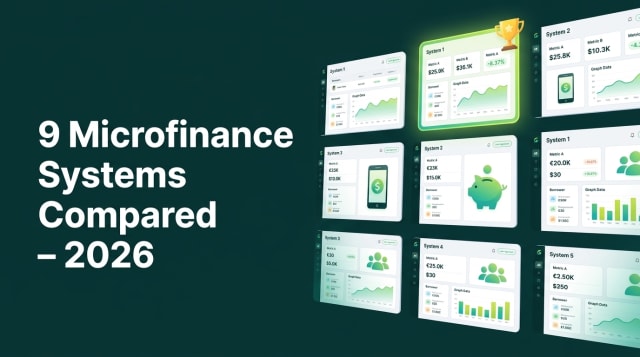
This guide explains what a micro loan management system should do, the features that matter most in Kenya, the red flags to avoid, and how to test a system properly before you pay. For a side-by-side list of vendors, see the best microfinance software in Kenya.
Signs you have outgrown Excel
- Reconciling M-Pesa repayments takes hours every week, and some payments can't be matched to a borrower.
- You find out a borrower is late only when you check the spreadsheet, days or weeks later.
- Different staff calculate interest, fees or penalties differently.
- You can't say exactly how much of your portfolio is overdue today.
- You have more than one branch, officer or M-Pesa line, and nobody sees the whole picture.
- A borrower disputes a balance and you can't show a clear history.
If two or more of these sound familiar, software will usually pay for itself in recovered arrears and staff time.
Must-have features for micro loan software in Kenya
| Feature | Why it matters for micro lending |
|---|---|
| M-Pesa disbursement (B2C) | Loans reach the borrower in minutes, and every disbursement is recorded automatically |
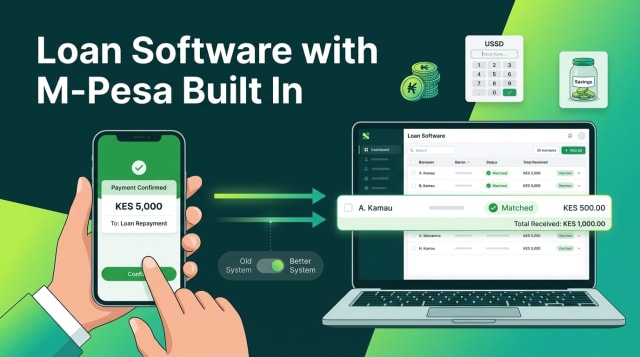
| Automatic repayment matching (C2B Paybill) and STK push | No manual reconciliation, so arrears show up the day they happen |
| Weekly, bi-weekly and short-term products | Micro borrowers earn daily or weekly, and monthly-only systems don't fit |
| Flat and reducing-balance interest, fees, early repayment discounts | Your actual pricing, calculated the same way every time. See flat vs reducing balance. |
| Credit scores and loan limits | New borrowers start small and limits grow with good repayment |
| SMS reminders and confirmations | Most late payments are forgotten payments |
| Penalties, grace periods and rollovers by policy | Consistent treatment, with every rollover recorded |
| USSD for borrowers | Borrowers on feature phones can check balances, apply and repay |
| Audit trail and staff roles | Protection against errors, disputes and staff fraud |
| Accounting and expense tracking | Know whether the business actually makes money |
Nice to have as you grow
- Multiple branches with branch-restricted access and approvals
- Staff collection targets and performance tracking
- A branded borrower portal and mobile app
- Bulk upload of borrowers
- Payroll
Red flags when choosing micro loan software
- "M-Pesa integration" that only means importing a statement. Ask whether repayments are matched automatically through C2B.
- No price until after a long sales process, or prices only in US dollars.
- Monthly-only loan products.
- Schedules that staff can edit after approval without leaving a trace.
- No way to try the system with your own products before paying.
- Extra charges that only appear later, for SMS, onboarding, training or each extra user.
How to test micro loan software in a free trial
A demo shows what the vendor wants you to see. A trial shows how the system handles your loans. In the first week, run this test:
- Recreate your most common product. For example, KES 10,000 over 4 weekly installments with your real interest and fees. Check the schedule matches what you charge today.
- Add five real borrowers, with guarantors or collateral if you use them.
- Approve and disburse a small test loan and check the borrower's SMS.
- Repay part of an installment and confirm the balance updates correctly.
- Leave one installment unpaid past its due date and see how it is flagged and penalised.
- Try a rollover and an early repayment.
- Log in as a loan officer and check what they can and can't see or change.
- Pull the reports you would need at month end.
Lendpoint offers a 7-day free trial with no credit card required, which is enough time to run all eight steps. Start a trial.
What micro loan software costs in Kenya
Expect one of two pricing models: a monthly or yearly subscription (SaaS), or a one-off licence with yearly support. On top of the software, budget for:
- SMS: bulk SMS credit and, for branded messages, a one-off Sender ID fee per network.
- M-Pesa: Safaricom's transaction charges on disbursements and collections.
- Onboarding: migrating your borrowers and active loans.
Lendpoint costs KES 5,000 per month (Starter) or KES 8,000 per month for multi-branch lenders (Professional), with about 17% off yearly and a one-time KES 10,000 onboarding and migration fee. See pricing.
Moving from Excel: a simple plan
- Clean your list. Make sure each borrower has one row, with correct phone numbers and ID numbers.
- Confirm balances. Agree each active loan's outstanding balance and next due date.
- Set up products first, then bulk-upload borrowers and load active loans.
- Connect your Paybill through Safaricom Daraja.
- Run both for two weeks, then retire the spreadsheet once the balances agree.
New to lending? Read how to start a micro lending business in Kenya, including CBK registration. Ready to see it working? See Lendpoint for micro lenders and MFIs.
Frequently asked questions
What is micro loan software?
Micro loan software is a system for issuing, tracking and collecting small loans. It covers borrower records, loan products, approvals, disbursement, repayment schedules, reminders, arrears and reporting. In Kenya it should disburse and collect through M-Pesa automatically.
What is the best micro loan software in Kenya?
Look for native M-Pesa disbursement and repayment matching, weekly products, USSD access, SMS reminders and published KES pricing. Lendpoint provides all of these from KES 5,000 a month. Compare options in our microfinance software comparison.
How much does micro loan software cost?
In Kenya, subscription systems start from a few thousand shillings a month. Lendpoint costs KES 5,000 or KES 8,000 a month plus a one-time KES 10,000 onboarding fee. Also budget for SMS and M-Pesa transaction charges.
Can micro loan software work with M-Pesa?
Yes. Good systems send loans through the M-Pesa B2C API, match Paybill repayments automatically through C2B, and support STK push so borrowers pay the exact installment with their PIN.
Is there free micro loan software?
Some tools offer free plans or open-source licences, but in Kenya the cost that matters is manual M-Pesa reconciliation and missed arrears. Use a free trial to test a full system with your own loans before you pay.
When should a micro lender switch from Excel to software?
When reconciling M-Pesa takes hours each week, arrears are discovered late, or more than one person handles loans. At that point, software usually pays for itself in recovered arrears and staff time.