Best Microfinance Software in Kenya (2026): 9 Systems Compared

Microfinance in Kenya runs on small, frequent loans and thin margins. A loan officer may follow up hundreds of weekly installments, and a few weeks of missed repayments can wipe out a branch's profit. The right microfinance software makes that workload manageable. The wrong one adds to it.
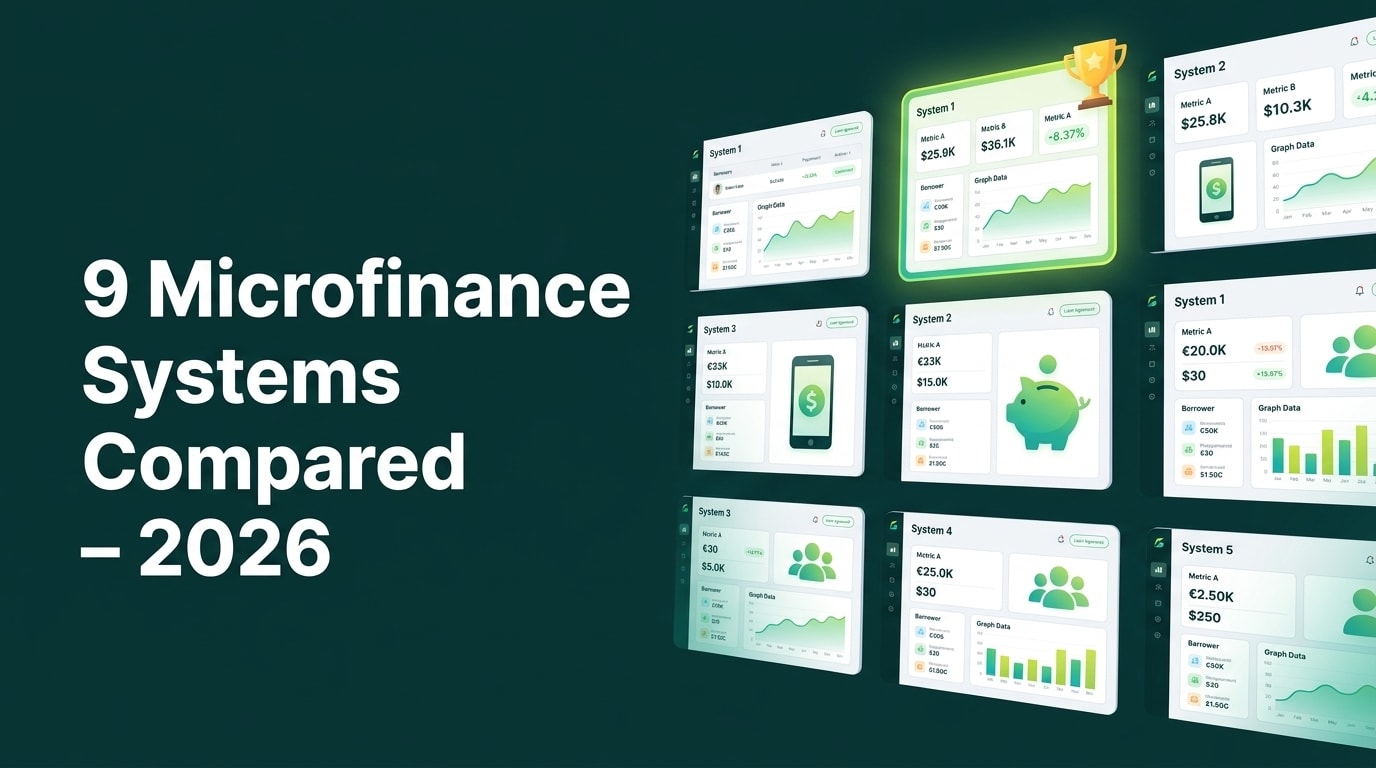
This guide compares nine microfinance systems used by Kenyan MFIs and credit-only lenders, on the features that matter for microfinance specifically. Lendpoint publishes it, so we have tried to be fair. Every system is judged on the same criteria, information comes from each vendor's public pages as of October 2026, and where something isn't published we say so.
What microfinance software in Kenya must do
General loan software often assumes monthly loans to salaried borrowers. Microfinance is different. Look for:
- Weekly and bi-weekly installments, with short terms of four to twelve weeks.
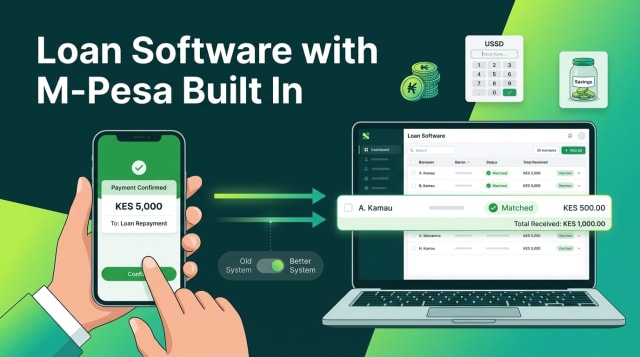
- M-Pesa disbursement and automatic repayment matching, because manual reconciliation is where arrears hide.
- Branch and officer control: per-branch access and approvals, and each officer's portfolio and collections.
- Collections automation: SMS reminders, overdue flags from day one and consistent penalties.
- Borrower access without smartphones, through USSD.
- Group lending, if your model uses solidarity groups.
- Savings, only if you are licensed to take them. Most Kenyan MFIs are credit-only.
9 microfinance systems compared
| System | Best for | Pricing | M-Pesa | Savings | Trial or demo |
|---|---|---|---|---|---|
| Lendpoint | Credit-only MFIs and micro lenders | KES 5,000–8,000/month | Built in (B2C, C2B, STK push) | No | 7-day free trial |
| Musoni | Established MFIs | Quote (listings show from about €15,000/year) | Yes | Yes | Ask vendor |
| BANKFUSE (Movetech) | MFIs wanting a modular local system | Quote | Yes, plus Airtel Money | Yes | Ask vendor |
| Fibo360 | Small MFIs with up to 1,000 clients | KES 58,000–120,000/year, plus VAT | Yes (C2B and B2C) | Yes | Public demo |
| Microplus | MFIs and SACCOs wanting an all-in-one suite | Not published | Yes, plus SMS and USSD | Yes, with shares and dividends | "Get started for free" |
| Craft Silicon Bankers Realm | Large, multi-country MFIs | Quote (SaaS or enterprise licence) | Ask vendor | Yes | Ask vendor |
| Presta | MFIs adding USSD and app lending | Quote | Yes | Ask vendor | Ask vendor |
| Loandisk | Very small lenders using a global tool | USD 59–346/month | Not listed | Yes | 45-day free trial |
| Mifos X | MFIs with their own IT team | Free licence; you pay for implementation and hosting | Through partners | Yes | Self-host |
The systems in detail
1. Lendpoint
Best for: credit-only MFIs and micro lenders that want M-Pesa automation at a published KES price.
Lendpoint is built in Kenya around how micro lenders actually lend. Products can be weekly, bi-weekly or monthly, or a single bullet payment, with flat or reducing-balance interest and fees deducted at disbursement or repaid with the loan. Approved loans go to M-Pesa automatically, Paybill repayments are matched to the right loan, and officers can send an STK push for the exact installment. SMS reminders, day-one overdue flags, policy-driven penalties and recorded rollovers handle collections. The Professional plan adds unlimited branches, branch-restricted staff and approvals, staff collection targets and payroll. Borrowers get USSD, a branded portal and a mobile app.
Watch-outs: Lendpoint is lending-only, with no savings accounts. It is built around individual loans with guarantors and collateral, not solidarity-group lending.
See Lendpoint for microfinance institutions.
2. Musoni
Best for: established MFIs with budget for a proven platform.
Musoni grew out of a Kenyan microfinance institution and is built on Mifos X. It covers clients, loans, savings, accounting and reporting, with M-Pesa and Airtel Money integration, and is used by MFIs across East Africa.
Watch-outs: pricing is by institution size, and listings show plans from about €15,000 a year.
3. BANKFUSE (Movetech Solutions)
Best for: MFIs wanting group, individual and SME lending with savings in one local system.
BANKFUSE covers group, individual and SME loans, savings and deposits, credit scoring and reporting, with M-Pesa, Airtel Money and bank integrations.
Watch-outs: pricing and USSD details aren't public.
4. Fibo360
Best for: small MFIs that want a known annual price.
Fibo360's microfinance module covers groups, loans and M-Pesa C2B and B2C. Annual pricing is published: KES 58,000 for up to 350 clients, KES 96,000 for up to 700 and KES 120,000 for up to 1,000, excluding VAT and user training. A public demo is available.
Watch-outs: pricing is tied to client numbers, so model your costs as you grow. Training is extra.
5. Microplus
Best for: institutions that want lending, savings, accounting, HR and payroll in one suite.
Microplus serves MFIs, SACCOs and credit providers in several East African countries. It covers loans, savings, shares and dividends, accounting, HR and payroll and reporting, and integrates with M-Pesa, SMS and USSD.
Watch-outs: pricing isn't published.
6. Craft Silicon Bankers Realm Core Microfinance
Best for: large or multi-country MFIs.
Craft Silicon is a Kenyan core banking company. Its Bankers Realm microfinance product covers group and individual origination, disbursement, collections, overdue management and analytics, with a mobile app for field staff. It is offered as SaaS or as an enterprise licence and is designed to work in low-bandwidth settings.
Watch-outs: it is a full core system, with the cost and implementation effort that implies.
7. Presta
Best for: MFIs adding mobile lending over USSD and an app.
Presta, founded in 2017, offers lending over USSD and an app, a configurable credit appraisal engine and M-Pesa and bank integrations.
Watch-outs: pricing is by quote.
8. Loandisk
Best for: very small lenders comfortable with a global tool.
Loandisk is a mature cloud loan tracker used in more than 60 countries, priced from USD 59 a month, with a 45-day free trial.
Watch-outs: M-Pesa isn't listed among its integrations, and dollar pricing moves with the exchange rate. See Loandisk alternatives in Kenya.
9. Mifos X
Best for: MFIs with in-house technical capacity.
Mifos X is open-source microfinance core banking. The licence is free, and Kenyan partners can host and implement it, including M-Pesa integration.
Watch-outs: implementation, hosting, customisation and support are real costs.
Also worth knowing: Extra Inch Technologies offers a core platform for microfinance institutions and credit unions, including agent banking, and international platforms such as Mambu and Temenos serve larger institutions.
How to choose: match the system to your model
- Credit-only MFI or micro lender, individual loans, M-Pesa heavy: Lendpoint.
- Group lending with savings: BANKFUSE, Musoni or Microplus.
- Small institution needing a fixed annual price: Fibo360.
- Large or multi-country MFI: Craft Silicon or Musoni.
- Own IT team: Mifos X with a local partner.
Before you sign, ask every vendor for the total yearly cost in KES including SMS, onboarding and training. Ask how M-Pesa repayments are matched to loans, and whether you can test the system with your own weekly products. For guidance on keeping arrears low once you are live, read how Kenyan MFIs cut NPLs.
Frequently asked questions
What is the best microfinance software in Kenya?
It depends on your model. For credit-only MFIs and micro lenders that disburse and collect through M-Pesa, Lendpoint offers native M-Pesa automation from KES 5,000 a month. For MFIs that also take savings or run group lending, consider BANKFUSE, Musoni or Microplus. Large institutions often use Craft Silicon.
How much does microfinance software cost in Kenya?
Published prices range from KES 5,000 a month (Lendpoint) and KES 58,000 a year (Fibo360) to around €15,000 a year for Musoni, according to software listings. Several vendors only quote on request. Budget separately for SMS, onboarding and training.
What is a microfinance management system?
It is software that runs an MFI's operations: client onboarding, loan products, approvals, disbursement, repayment schedules, collections, branches, accounting and reporting. In Kenya it should also disburse and collect through M-Pesa.
Which microfinance systems integrate with M-Pesa?
Lendpoint, Musoni, BANKFUSE, Fibo360, Microplus and Presta all list M-Pesa integration. Confirm how repayments are matched to loans, which is the part that saves the most staff time.
Do microfinance institutions in Kenya need a licence?
Yes. Deposit-taking microfinance banks are licensed by CBK under the Microfinance Act. Credit-only lenders must now be registered or licensed by CBK as non-deposit-taking credit providers. See how to get a CBK lending licence.